Poster Archive
 DANA STUCE | MOTHERS AND CHILDREN IN THE LMA POSTER COLLECTION
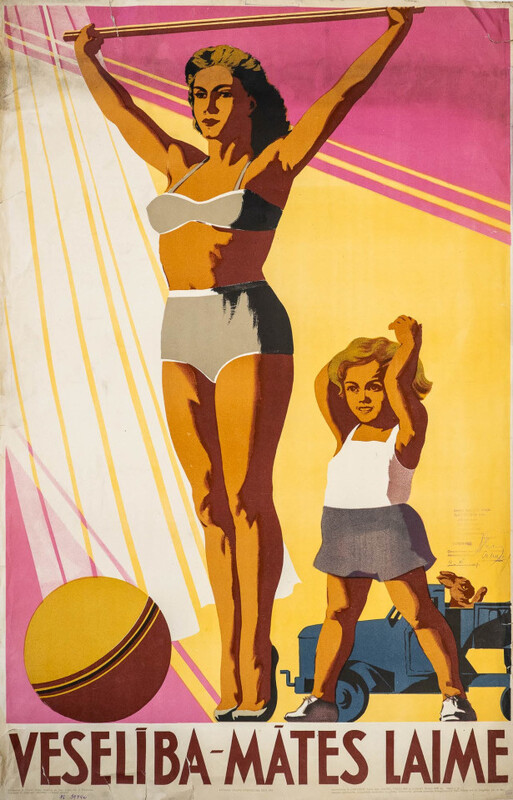
An attractive, athletic woman in a swimsuit, her face set with determination, rises onto her tiptoes and holds an exercise wand overhead with both hands; beside her, her young daughter playfully attempts to mimic her mother’s movements. The atmosphere in the room is relaxed—sunlight streams in through the open window, an exercise ball rolls across the floor, and in the background, a toy bunny rides in a wind-up toy car (Fig. 1). One might imagine this scene comes from a fitness blogger’s morning routine video, yet in reality, nearly seventy years separate us from this idyllic moment—it is captured in a work from the Latvian Academy of Art’s poster collection, which comprises over 4,000 items.
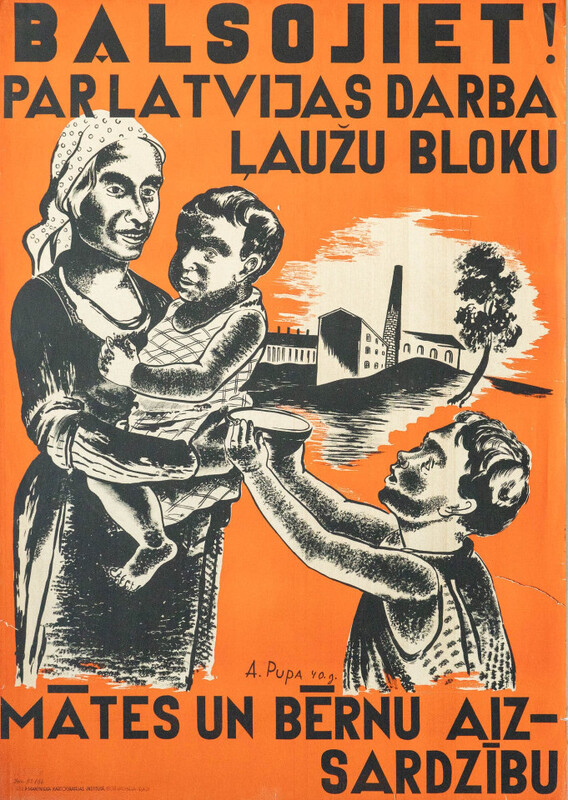
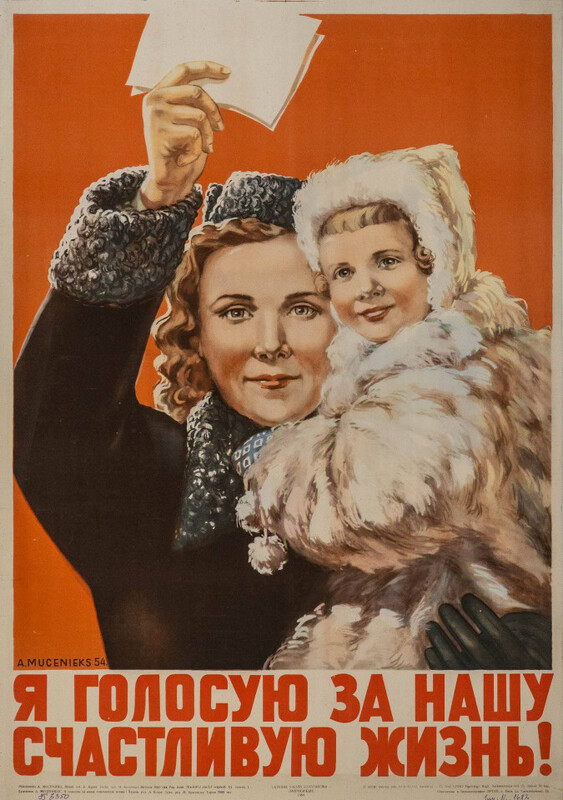
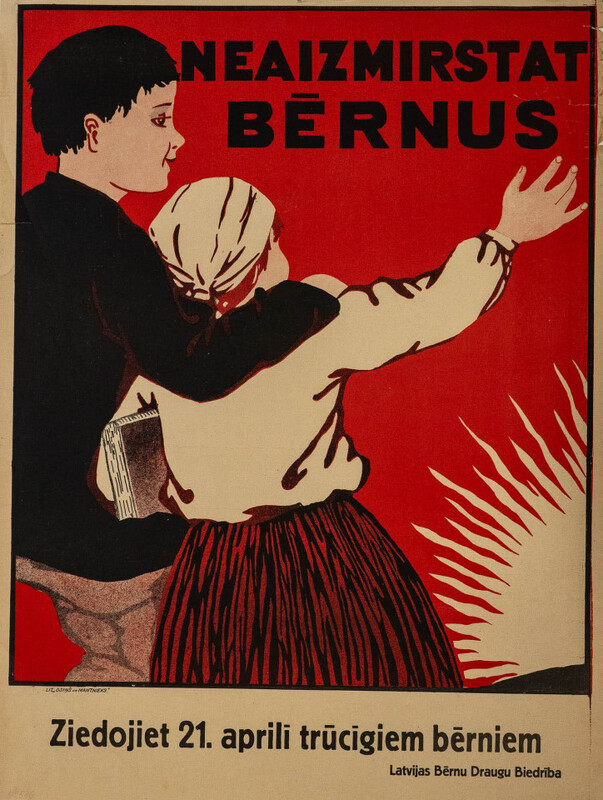
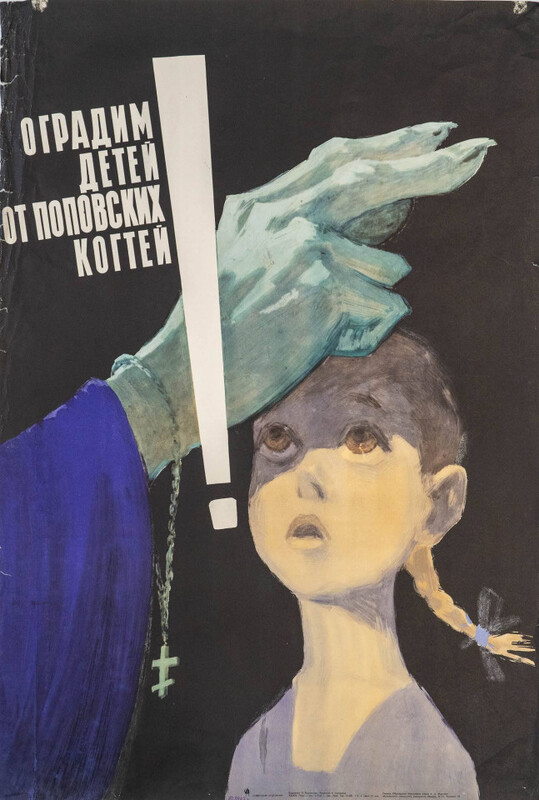
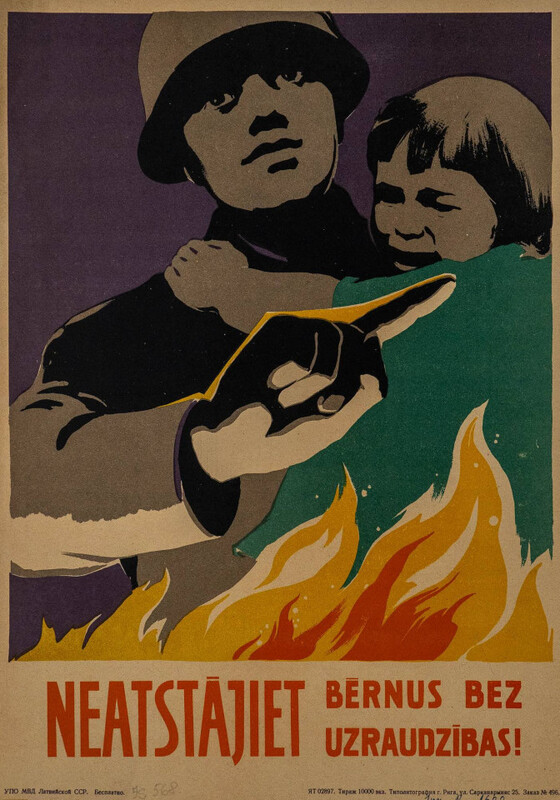
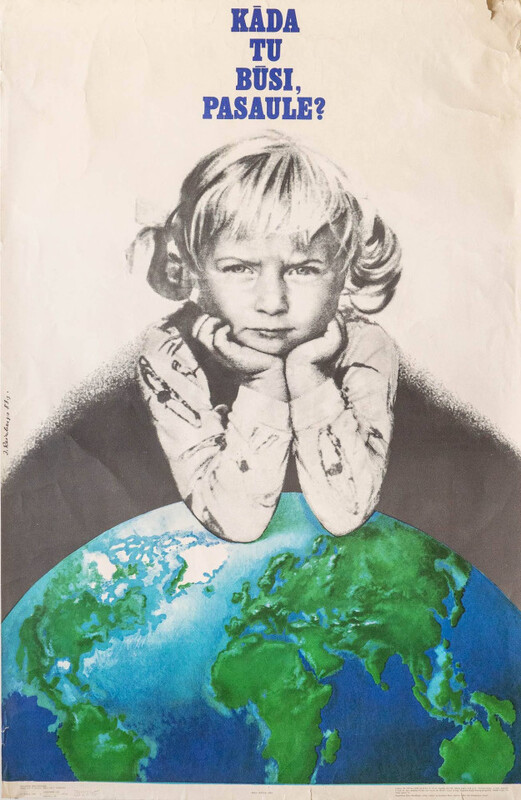
A poster has always been more than just a vehicle for information; it is a concentrated message that instantly engages the viewer—a visual tool for shaping public opinion and action. The poster acts as a barometer of society, not only striving to influence the public mood (as it is intended for public, not private, consumption) but also processing and reflecting that mood back to the viewer. Its goal is to use powerful design to capture the viewer's attention and hold it just long enough to convey its message. Amidst countless political, everyday, and informational posters, a recurring yet multifaceted motif stands out in particular: the relationship between mother and child. This image is universal and instantly recognizable, yet in the language of posters, it is never neutral. The mother and child become a symbol in which the personal and the political, the bodily and the ideological, converge.
Images