 Poster Archive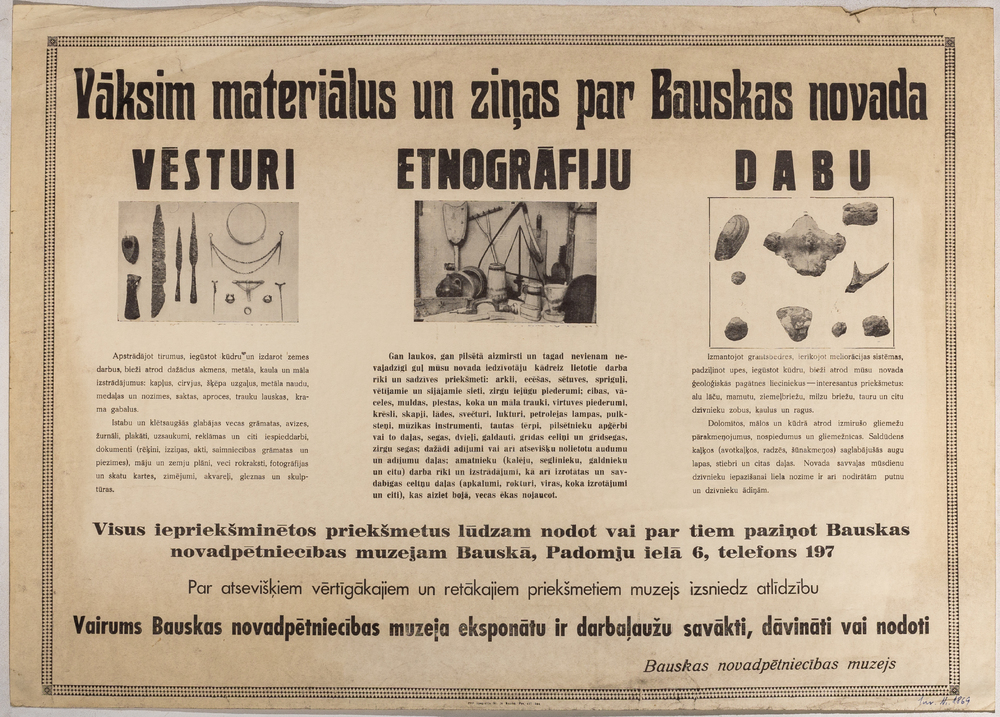
We will collect materials and information about the history, ethnography, and nature of Bauska Municipality
Poster
This image is available only to signed-in users.
Protected by copyright. The poster images are published on the website for non-commercial purposes – for viewing, education and research.
- Identifier
- JS583
- Category
- P.6. Protection of nature and monuments
- Subject
- P.6.2. Cultural monuments
- Shelve
- D.6.
- Title
-
en
We will collect materials and information about the history, ethnography, and nature of Bauska Municipality
AI (Unreviewed)
Provenance Translated by mistral-large-latest on 23.04.2026 - Vāksim materiālus un ziņas par Bauskas novada vēsturi, etnogrāfiju, dabu
- Year
- unknown
- Author
- unknown
- Publisher
- unknown
- Place
- Bauska
- Method
- unknown
- Dimensions
- 84 x 60 cm
- Preservation
- 8
- Count
- 2
- Language
-
Latvian
AI (Unreviewed)
Provenance Generated by mistral-large-latest on 23.07.2026
The poster is designed on a yellowish, aged-paper-toned background with darker, brownish edge effects. At the top, large, thick Gothic-style letters dominate, forming three separate words, each positioned lower than the previous one. In the left column, black-and-white illustrations depict old work tools, such as scissors and needles. The middle section features a black-and-white photograph with various ethnic objects, including dishes and tools. On the right side, several Stone Age artifacts are shown, also in black and white. At the bottom, smaller, slimmer typefaces form informative texts. The poster's design is divided into three vertical columns, each with separate illustrations and text blocks.
AI (Unreviewed)
Provenance Generated by mistral-large-latest on 21.07.2026; Translated by mistral-large-latest on 22.07.2026
Vāksim materiālus un ziņas par Bauskas novada
VĒSTURI
ETNOGRĀFIJU
D A B U
Apstrādājot tirumus, iegūstot kūdru un izdarot zemes darbus, bieži atrod dažādus akmens, metāla, kaula un māla izstrādājumus: kapļus, cirvjus, šķēpa uzgaļus, metāla naudu, medaļas un nozīmes, saktas, aproces, trauku lauskas, krama gabalus.
Istabu un klētsaugšās glabājas vecas grāmatas, avizes, žurnāli, plakāti, uzsaukumi, reklāmas un citi iespieddarbi, dokumenti (rēķini, izziņas, akti, saimniecības grāmatas un piezīmes), māju un zemju plāni, veci rokraksti, fotogrāfijas un skatu kartes, zīmējumi, akvareļi, gleznas un skulptūras.
Gan laukos, gan pilsētā aizmirsti un tagad nevienam nevajadzīgi guļ mūsu novada iedzīvotāju kādreiz lietotie darba rīki un sadzīves priekšmeti: arkli, ecešas, sētuves, sprīguļi, vēstījamie un [?] sieti, zirgu [?] piederumi: cības, vāceles, muldas, piestas, koka un mala trauki, virtuves piederumi, krēsli, skapļi, lādes, svečturi, lukturi, petrolejas lampas, pulksteņi, mūzikas instrumenti, tautas tērpi, pilsētnieku apģērbi vai to daļas, segas, dvieļi, galdauti, grīdas celtņi un grīdsegas, zirgu segas; dažādi adiļumi vai arī atsevišķu nolietotu audumu un adiļumu daļas; amatnieku (kalēju, seglinieku, galdnieku un citu) darba rīki un izstrādājumi, kā arī izrotātas un savdabīgas celtņu daļas (apkalumi, rokturi, vīras, koka izrotājumi un citi), kas aiziet bojā, vecas ēkas noļaucot.
Izmantojot grantsbecīres, ierīkojot meliorācijas sistēmas, padziļinot upes, iegūstot kūdru, bieži atrod mūsu novada ģeoloģiskās pagātnes lieciniekus—interesantus priekšmetus: alu lāču, mamutu, ziemeļbriežu, milzu briežu, tauru un citu dzīvnieku zobus, kaulus un ragus.
Dolomitos, mālos un kūdrā atrod izmirušo gliemežu pārskmeņojumus, nospiedumus un gliemežnīcas. Saldūdeus kaļķos (avotkaļķos, radzēs, šīinskmeņos) saglabājušās augu lapas, stiebri un citas daļas. Novada savvaļas mūsdienu dzīvnieku iepazīšanai liela nozīme ir arī nodirātām putnu un dzīvnieku ādiņām.
Visus iepriekšminētos priekšmetus lūdzam nodot vai par tiem paziņot Bauskas novadpētniecības muzejam Bauskā, Padomju ielā 6, telefons 197
Par atsevišķiem vērtīgākajiem un retākajiem priekšmetiem muzejs izsniedz atlīdzību
Vairums Bauskas novadpētniecības muzeja eksponātu ir darbaļaužu savākti, dāvināti vai nodoti
Bauskas novadpētniecības muzejs
VĒSTURI
ETNOGRĀFIJU
D A B U
Apstrādājot tirumus, iegūstot kūdru un izdarot zemes darbus, bieži atrod dažādus akmens, metāla, kaula un māla izstrādājumus: kapļus, cirvjus, šķēpa uzgaļus, metāla naudu, medaļas un nozīmes, saktas, aproces, trauku lauskas, krama gabalus.
Istabu un klētsaugšās glabājas vecas grāmatas, avizes, žurnāli, plakāti, uzsaukumi, reklāmas un citi iespieddarbi, dokumenti (rēķini, izziņas, akti, saimniecības grāmatas un piezīmes), māju un zemju plāni, veci rokraksti, fotogrāfijas un skatu kartes, zīmējumi, akvareļi, gleznas un skulptūras.
Gan laukos, gan pilsētā aizmirsti un tagad nevienam nevajadzīgi guļ mūsu novada iedzīvotāju kādreiz lietotie darba rīki un sadzīves priekšmeti: arkli, ecešas, sētuves, sprīguļi, vēstījamie un [?] sieti, zirgu [?] piederumi: cības, vāceles, muldas, piestas, koka un mala trauki, virtuves piederumi, krēsli, skapļi, lādes, svečturi, lukturi, petrolejas lampas, pulksteņi, mūzikas instrumenti, tautas tērpi, pilsētnieku apģērbi vai to daļas, segas, dvieļi, galdauti, grīdas celtņi un grīdsegas, zirgu segas; dažādi adiļumi vai arī atsevišķu nolietotu audumu un adiļumu daļas; amatnieku (kalēju, seglinieku, galdnieku un citu) darba rīki un izstrādājumi, kā arī izrotātas un savdabīgas celtņu daļas (apkalumi, rokturi, vīras, koka izrotājumi un citi), kas aiziet bojā, vecas ēkas noļaucot.
Izmantojot grantsbecīres, ierīkojot meliorācijas sistēmas, padziļinot upes, iegūstot kūdru, bieži atrod mūsu novada ģeoloģiskās pagātnes lieciniekus—interesantus priekšmetus: alu lāču, mamutu, ziemeļbriežu, milzu briežu, tauru un citu dzīvnieku zobus, kaulus un ragus.
Dolomitos, mālos un kūdrā atrod izmirušo gliemežu pārskmeņojumus, nospiedumus un gliemežnīcas. Saldūdeus kaļķos (avotkaļķos, radzēs, šīinskmeņos) saglabājušās augu lapas, stiebri un citas daļas. Novada savvaļas mūsdienu dzīvnieku iepazīšanai liela nozīme ir arī nodirātām putnu un dzīvnieku ādiņām.
Visus iepriekšminētos priekšmetus lūdzam nodot vai par tiem paziņot Bauskas novadpētniecības muzejam Bauskā, Padomju ielā 6, telefons 197
Par atsevišķiem vērtīgākajiem un retākajiem priekšmetiem muzejs izsniedz atlīdzību
Vairums Bauskas novadpētniecības muzeja eksponātu ir darbaļaužu savākti, dāvināti vai nodoti
Bauskas novadpētniecības muzejs
AI (Unreviewed)
Provenance Generated by mistral-ocr-latest on 23.07.2026
Let's gather materials and information about Bauska Municipality's
HISTORY
ETHNOGRAPHY
CULTURE
While cultivating fields, extracting peat, and performing earthworks, various stone, metal, bone, and clay artifacts are often found: hoes, axes, spearheads, metal coins, medals and badges, brooches, buckles, pottery shards, flint pieces.
In rooms and attic storages, old books, newspapers, magazines, posters, appeals, advertisements, and other printed works, documents (invoices, notices, acts, household books and notes), house and land plans, old manuscripts, photographs and postcards, drawings, watercolors, paintings, and sculptures are kept.
Both in the countryside and in the city, forgotten and now unnecessary lie the once-used tools and household items of our municipality's inhabitants: plows, harrows, seeders, flails, winnowing and [?] sieves, horse [?] accessories: bridles, halters, troughs, mortars, wooden and clay dishes, kitchen utensils, chairs, cabinets, chests, candlesticks, lanterns, kerosene lamps, clocks, musical instruments, folk costumes, townspeople's clothing or parts thereof, blankets, towels, tablecloths, floor lifts and floor coverings, horse blankets; various knitted items or individual parts of worn fabrics and knitwear; craftsmen's (blacksmiths, saddlers, carpenters, and others) tools and products, as well as decorated and unique building parts (fittings, handles, hinges, wood carvings, and others) that perish when old buildings are demolished.
Using gravel pits, installing drainage systems, deepening rivers, and extracting peat, witnesses of our municipality's geological past—interesting objects—are often found: cave bear, mammoth, reindeer, giant deer, aurochs, and other animals' teeth, bones, and antlers.
In dolomite, clay, and peat, fossils of extinct snails, imprints, and shells are found. In freshwater limestones (spring limestones, tufa, travertine), preserved plant leaves, stems, and other parts remain. For getting to know the current wildlife of the municipality, shed skins of birds and animals are also of great importance.
We kindly ask to hand over or report all the aforementioned items to the Bauska Local History Museum in Bauska, Padomju Street 6, telephone 197.
The museum provides compensation for individual more valuable and rarer items.
Most of the Bauska Local History Museum's exhibits have been collected, donated, or handed over by working people.
Bauska Local History Museum
HISTORY
ETHNOGRAPHY
CULTURE
While cultivating fields, extracting peat, and performing earthworks, various stone, metal, bone, and clay artifacts are often found: hoes, axes, spearheads, metal coins, medals and badges, brooches, buckles, pottery shards, flint pieces.
In rooms and attic storages, old books, newspapers, magazines, posters, appeals, advertisements, and other printed works, documents (invoices, notices, acts, household books and notes), house and land plans, old manuscripts, photographs and postcards, drawings, watercolors, paintings, and sculptures are kept.
Both in the countryside and in the city, forgotten and now unnecessary lie the once-used tools and household items of our municipality's inhabitants: plows, harrows, seeders, flails, winnowing and [?] sieves, horse [?] accessories: bridles, halters, troughs, mortars, wooden and clay dishes, kitchen utensils, chairs, cabinets, chests, candlesticks, lanterns, kerosene lamps, clocks, musical instruments, folk costumes, townspeople's clothing or parts thereof, blankets, towels, tablecloths, floor lifts and floor coverings, horse blankets; various knitted items or individual parts of worn fabrics and knitwear; craftsmen's (blacksmiths, saddlers, carpenters, and others) tools and products, as well as decorated and unique building parts (fittings, handles, hinges, wood carvings, and others) that perish when old buildings are demolished.
Using gravel pits, installing drainage systems, deepening rivers, and extracting peat, witnesses of our municipality's geological past—interesting objects—are often found: cave bear, mammoth, reindeer, giant deer, aurochs, and other animals' teeth, bones, and antlers.
In dolomite, clay, and peat, fossils of extinct snails, imprints, and shells are found. In freshwater limestones (spring limestones, tufa, travertine), preserved plant leaves, stems, and other parts remain. For getting to know the current wildlife of the municipality, shed skins of birds and animals are also of great importance.
We kindly ask to hand over or report all the aforementioned items to the Bauska Local History Museum in Bauska, Padomju Street 6, telephone 197.
The museum provides compensation for individual more valuable and rarer items.
Most of the Bauska Local History Museum's exhibits have been collected, donated, or handed over by working people.
Bauska Local History Museum